In our modern world of consumerism, where marketing is king and packaging reigns supreme, subtle differences often go unnoticed. From food packaging to household products, we live surrounded by items designed to look bigger, better, or more valuable than they truly are. Most people never notice these changes — but once you do, you can’t unsee them. These small shifts are not just marketing tactics; they are strategies that can deeply impact your finances, health, perception of value, and even trust in brands.
This article takes a deep dive into one specific example of this widespread issue — how two seemingly identical pepper containers became the subject of a public debate — and uses it as a lens to explore a much broader, high-stakes topic: the importance of the tiny differences consumers miss, and why they matter more than you think.
The Psychology of Packaging: Why the Eye Can Be Deceived
Most shoppers don’t take the time to read every label, weigh every box, or compare unit prices. Instead, we rely on visual cues — packaging size, brand familiarity, perceived weight, and shelf placement — to make decisions. This makes it easier for companies to manipulate those visuals without technically doing anything illegal.
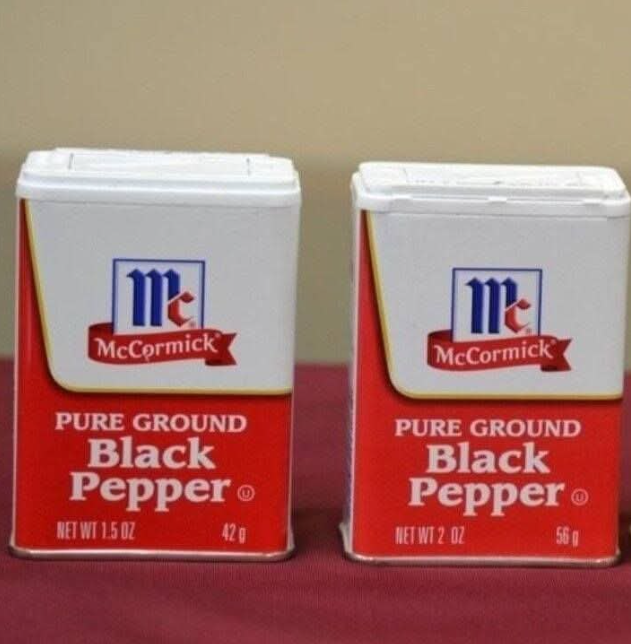
Imagine two pepper tins, nearly identical in size. One contains 8 ounces of black pepper, the other only 6 ounces. But unless you look very closely, you’d never notice. The tin with less product is puffed up with air, or made of thicker material, or simply designed in a way that it feels just as full. And here’s the twist: you’re paying the same price for both.
This is no accident.
It’s a subtle form of manipulation. The industry calls it shrinkflation — giving you less while charging the same (or more). But most people can’t spot the difference unless they’ve been trained to look. And even when they do notice, they may not understand the financial and psychological consequences of this small change.
How Small Differences Cost You More Than You Think
Let’s break down the real cost of these hidden changes. A product reduced by 25% but sold at the same price has undergone a stealth price increase. If this happens across multiple items in your cart, you could be paying 15% to 25% more per shopping trip — without even realizing it.
For example:
- A pepper tin that once held 8 oz now holds 6 oz.
- A laundry detergent bottle that once gave you 50 loads now offers 40.
- A cereal box that looks the same but now contains 20% less product.
Multiply this across a family of four, every week, for months — the cost adds up dramatically. That’s not just money lost; that’s value removed without consent, under the disguise of normalcy.
Why Companies Do It (and How They Get Away With It)
Large corporations are constantly facing cost pressures: ingredient costs rise, labor expenses increase, and supply chains become more expensive. But they know that directly raising prices risks alienating customers.
So, what do they do? They:
- Reduce the quantity, not the price.
- Keep the packaging similar, so the change goes unnoticed.
- Use optical illusions — like thicker packaging, wider containers, or opaque boxes — to mask the reduced contents.
- Avoid announcing changes, banking on consumer habits and visual shortcuts.
It’s the perfect storm: maximize profits, reduce backlash, and hope the buyer never notices.
The Role of Packaging Design in Deception
Packaging isn’t just about protection or branding — it’s a powerful psychological tool. Designers are taught how to:
- Make smaller packages appear full-sized.
- Use colors that convey abundance or freshness.
- Hide empty space by using curved edges or raised bottoms.
- Position text and weight information so it’s less noticeable.
Some boxes have “false bottoms”, where the inside is indented to reduce volume, yet from the outside it looks the same. Others use opaque plastic, so you can’t see how little is actually inside. These tricks play on our assumptions — we think we’re getting the same product, so we don’t check.
The Shrinkflation Effect: What It Really Means for You
This quiet practice, where manufacturers give you less but charge the same, affects more than just your wallet. It has ripple effects in:
1. Consumer Trust
Once buyers discover they’ve been misled, they often feel betrayed. Trust in a brand can take years to build — and seconds to lose. Even a loyal customer may walk away permanently after learning that a familiar product has changed quietly.
2. Purchasing Decisions
People might start looking for alternatives — switching to private label brands, imported products, or bulk items that still offer real value.
3. Financial Planning
Over time, these changes impact household budgeting. What once lasted a month now lasts three weeks. That means more frequent purchases, higher expenses, and reduced purchasing power.
4. Health and Portion Control
When portion sizes decrease but packaging stays the same, consumers may overconsume without realizing it. This is especially concerning in items like snacks, cereals, and beverages, where subtle changes can alter nutritional intake.
How to Spot the Differences Before It’s Too Late
Knowledge is power. If you want to fight back against deceptive product downsizing, here are simple strategies you can use every time you shop:
✅ Compare Price Per Unit
Always look for the price per ounce, gram, or liter. This tells you the real cost — regardless of packaging.
✅ Read the Fine Print
Check the net weight or volume listed on the packaging. It may have changed without any visual clues.
✅ Watch for New Versions of Old Products
If the package looks a little “updated” or the branding has shifted, check if the contents have changed too.
✅ Don’t Assume Bigger Packaging Means More
In fact, bigger packaging is often used to hide smaller quantities.
✅ Use Digital Tools
Some shopping apps let you compare price-per-unit instantly. Use them.
✅ Stay Informed
When you hear that a product has changed its formula or quantity, verify before buying.
Click page 2 for more