Step 3: Dry the Zest
- Air Drying: Spread zest thinly on parchment paper in a warm, dry place. It can take 1–3 days depending on humidity.
- Oven Drying: Preheat your oven to the lowest setting (usually 120°F / 50°C). Place zest on a baking tray lined with parchment and dry for 2–3 hours, checking regularly.
- Dehydrator: This is ideal. Set temperature to 95–115°F (35–45°C) and dehydrate for 4–6 hours until completely dry and brittle.
Step 4: Grind to Powder
Once zest is fully dry and crisp, use a spice grinder or coffee grinder to pulverize it to a fine powder. Pulse in short bursts to avoid overheating.
Step 5: Sift and Store
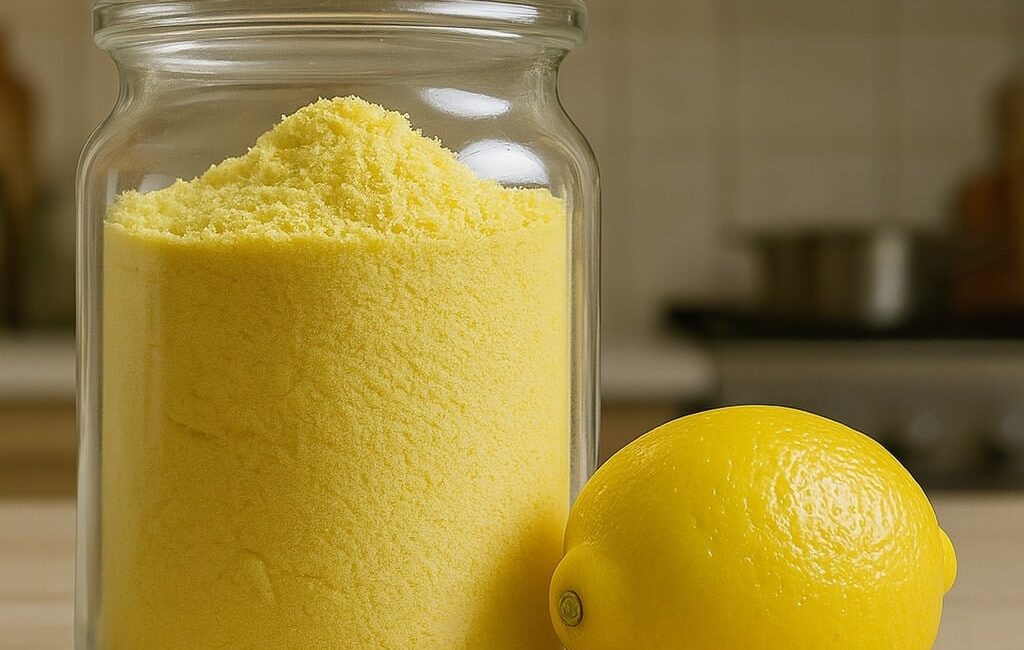
Sift the powder through a fine sieve to remove any larger particles. Store in an airtight container in a cool, dark place to preserve flavor and aroma.
Culinary Uses: How to Incorporate Lemon Powder into Your Cooking and Baking
Baking and Desserts
- Cookies and Cakes: Add ½ to 1 teaspoon to your batter or dough to infuse subtle citrus notes. Lemon powder integrates better than zest in dry mixes.
- Frostings and Icings: Blend lemon powder into buttercream or cream cheese frosting for a bright, refreshing finish.
- Pancakes and Waffles: Sprinkle a pinch into the batter for a zesty twist.
- Fruit Salads and Yogurt: Dust lemon powder over fresh berries or mix into yogurt for a natural flavor boost.
Beverages and Cocktails
- Tea and Infusions: Stir into hot or iced tea for instant citrus aroma without the mess of fresh lemon.
- Cocktail Rims: Combine lemon powder with salt or sugar to rim glasses for margaritas, gin and tonics, or lemon spritzers.
- Smoothies: Blend lemon powder into smoothies for tangy brightness.
Savory Cooking
- Seasoning Blends: Mix lemon powder with salt, black pepper, and herbs for a zesty dry rub perfect for chicken, fish, or grilled vegetables.
- Dressings and Marinades: Add lemon powder to vinaigrettes or marinades to add citrus depth without extra acidity or moisture.
- Rice and Grain Dishes: Stir a small amount into risotto, quinoa, or couscous for bright undertones.
- Seafood and Poultry: Finish sauces or compound butters with lemon powder to enhance freshness.
Nutritional Profile and Health Benefits
Lemon peel, the base of lemon powder, is rich in essential oils and antioxidants:
- Limonene: The primary compound responsible for citrus aroma, known for anti-inflammatory and potential anti-cancer properties.
- Flavonoids: Plant compounds with antioxidant effects that may help reduce oxidative stress.
- Vitamin C: Though some is lost in drying, lemon powder still retains a small amount beneficial for immune support.
- Low Calorie and Low Carb: Perfect for keto, paleo, or low-calorie diets.
Storage and Shelf Life
Proper storage is critical for maintaining the flavor intensity of lemon powder:
- Use airtight, opaque containers to protect from moisture and light.
- Store in a cool, dry pantry or cupboard.
- Avoid frequent opening to prevent humidity exposure.
- When stored correctly, lemon powder maintains peak flavor for 6–12 months.
- If clumping or off-odor appears, it’s best to discard.
Creative Lemon Powder Recipe Ideas
Lemon Pepper Seasoning
- 2 tablespoons lemon powder
- 1 tablespoon cracked black pepper
- 1 teaspoon sea salt
Perfect for seasoning grilled chicken, fries, or roasted vegetables.
Lemon Sugar Sprinkle
- ¼ cup granulated sugar
- 1 teaspoon lemon powder
Use this sweet citrus blend to top muffins, scones, or fresh fruit.
Citrus Herb Blend
- 1 tbsp lemon powder
- 1 tbsp dried parsley
- 1 tsp dried thyme
- 1 tsp garlic powder
Ideal for sprinkling over roasted potatoes or mixing into meatloaf.
Lemon Marinade Paste
Mix lemon powder with olive oil, garlic, and fresh herbs to marinate chicken or fish.
Sustainability and Cost-Effectiveness
Using lemon powder promotes sustainability by utilizing the entire lemon fruit, reducing food waste. Homemade powder also cuts costs compared to commercially prepared citrus seasonings.
Frequently Asked Questions
Q: Can I substitute lemon powder for fresh lemon juice?
Powder is more concentrated and dry, so it works best for flavoring without moisture. For acidity, combine with a small amount of vinegar or citric acid.
Q: Is lemon powder gluten-free and allergen-free?
Pure lemon powder is naturally gluten-free and typically allergen-free, but always check if purchased commercially.
Q: How do I prevent bitterness?
Avoid the white pith when zesting and dry at low temperatures to preserve flavor.
Q: Can I make other citrus powders?
Yes! Lime, orange, grapefruit powders can be made using the same method.
Conclusion: Elevate Your Kitchen with Lemon Powder
From elevating the simplest cookie to transforming a savory marinade, lemon powder brings versatility, convenience, and an explosion of citrus flavor to your culinary arsenal. It is a powerhouse ingredient that not only simplifies cooking but also adds complexity and brightness.
Whether you’re experimenting with new recipes or seeking a pantry staple to brighten up meals year-round, lemon powder is an ingredient worth making and mastering.